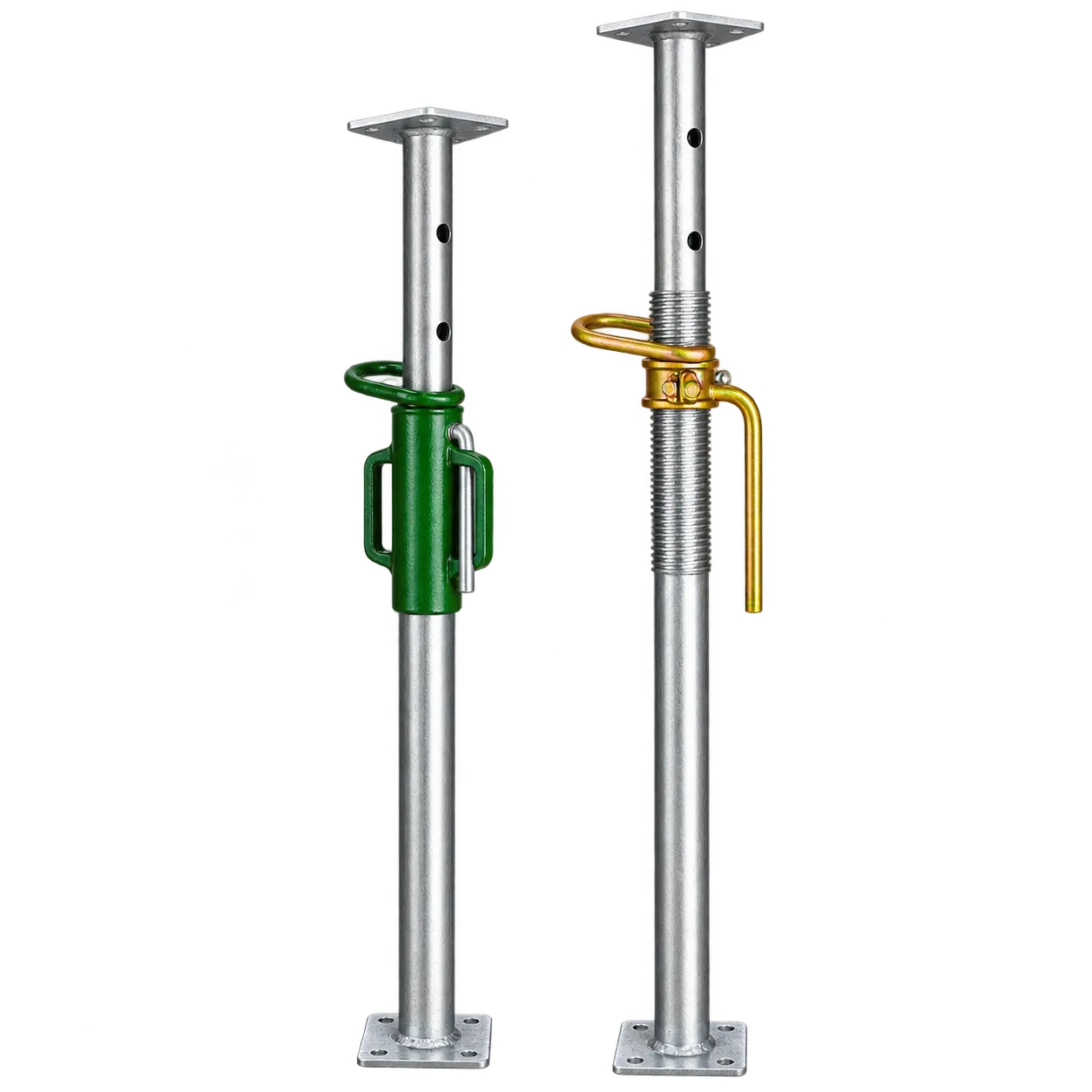
Hooks for cuplock ledgers, plain for tube frames
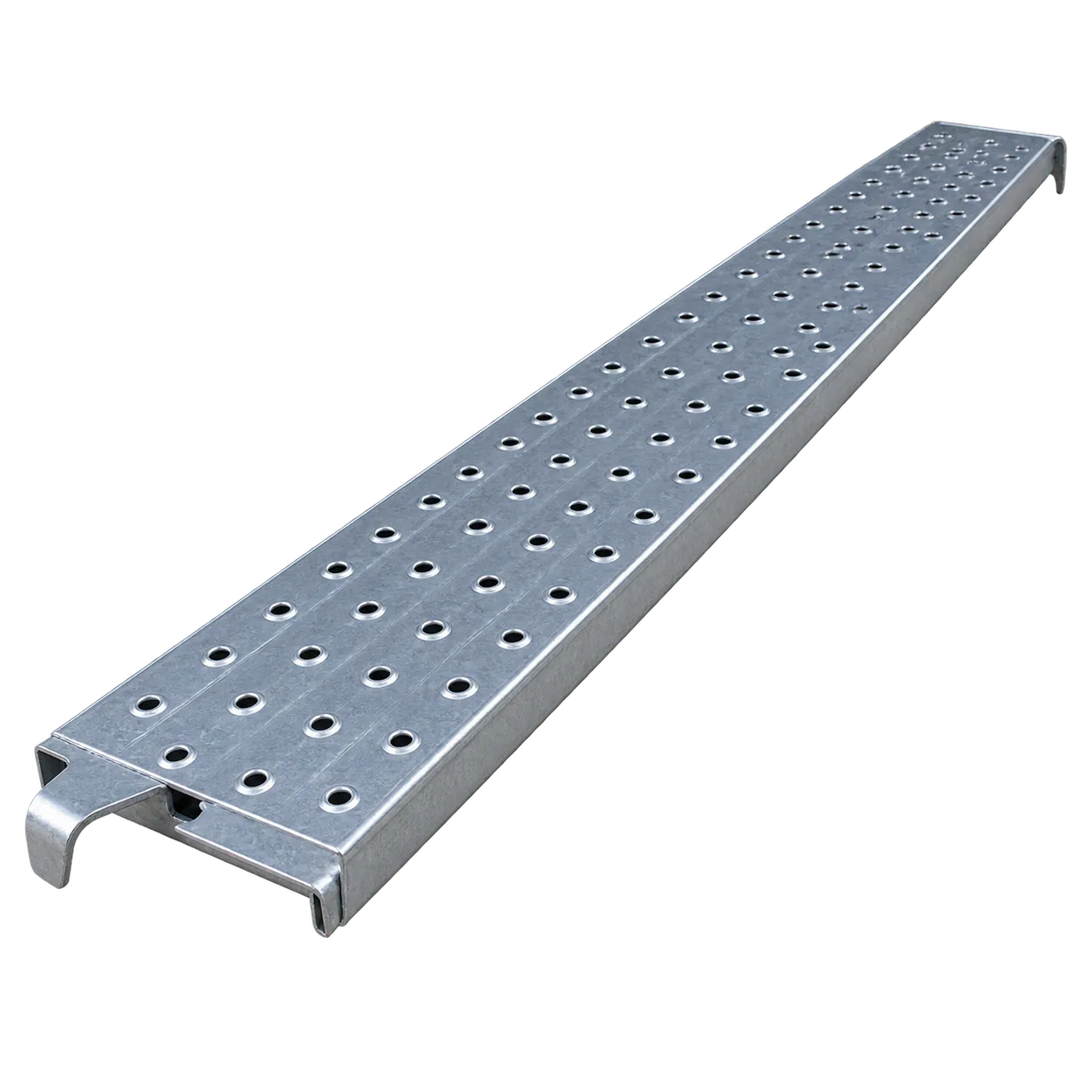
Hook ends lock square into the sockets of cuplock and ringlock ledgers. Plain ends sit on the ledgers of tube-and-fitting platforms, letting the ledger position each plank as it runs across the bay.
Jacks, Planks & Systems
Planks form the working surface of assembly scaffolds and the deck of tube-and-fitting platforms. Hook-end planks interlock with cuplock and ringlock ledgers; plain-end planks sit on the ledgers of tube-and-fitting systems. Available in widths from 9 to 12 inches and lengths from 3 to 12 feet, in zinc-plated, pre-galvanized or hot dip galvanized finishes. Specify width, length, end type, finish and the quantity you need.
At a glance
Hook ends lock square into the sockets of cuplock and ringlock ledgers. Plain ends sit on the ledgers of tube-and-fitting platforms, letting the ledger position each plank as it runs across the bay.
Planks are formed from steel strip and perforated across the deck surface. The perforations provide slip-resistant grip for the user and reduce weight without compromising strength.
Widths: 9 in (225–230 mm), 10 in (250–300 mm), 12 in (300–320 mm). Lengths: 3 to 12 ft (0.5–4 m). Thickness: 12 G to 10 G (2–3 mm; 1.1–2.5 mm available). Finishes: zinc-plated, pre-galvanized, hot dip galvanized.
Position the first plank across the ledgers, seating hook ends or plain ends as the system requires. Lay the next plank beside it and continue across the bay, butting the ends together. The perforated surface provides grip for the user, and multiple planks can be laid lengthwise along the run or side-by-side to span the bay.
Common applications
Cuplock bays have ledgers spaced at standard intervals; planks with matching hook ends lock directly into the sockets. The perforated surface keeps workers from slipping, and the planks interlock so they cannot shift or separate.
On welded tube-and-fitting scaffolds, plain-end planks sit on the ledgers that carry them. The ledger itself positions and supports each plank, holding it in line across the bay.
Temporary working levels during renovation, cavity tray installation and facade work require platforms that span the scaffold width. Planks in the required width and length make up the deck, sitting on the ledgers or transom rails.
Questions answered
Planks form the working surface of cuplock and tube-and-fitting platforms. Screw jacks level the support rails, and the planks interlock to create a secure deck.
Explore scaffolding & shoring systems ↗Planks specifications
Scaffolding & Shoring
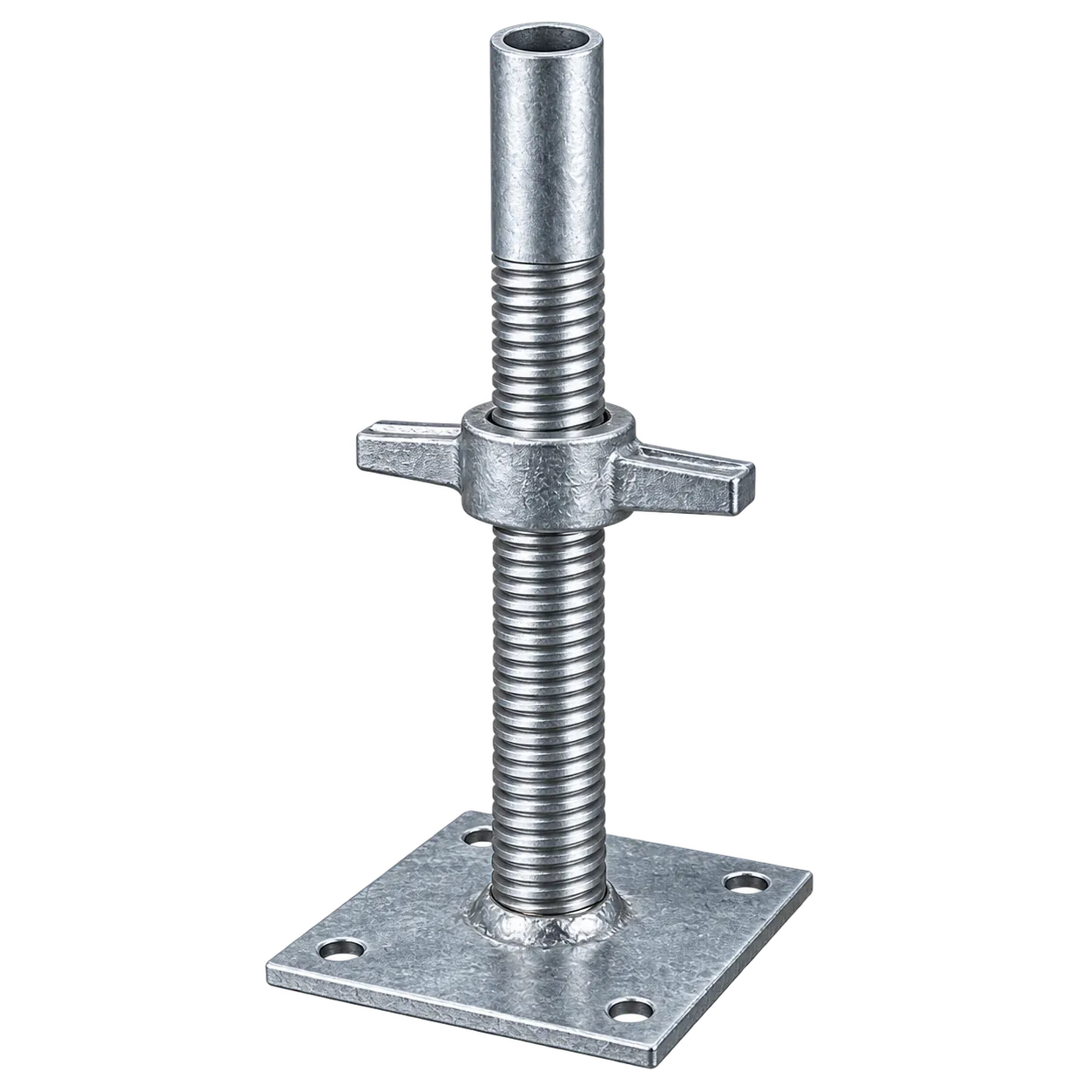
Diameter: 1-1/4, 1-1/2 in (N.B.) / 33.7, 38, 38.1 mm (O.D.); 26-48 mm to order · Length: 24-36 in / 600-900 mm
Specifications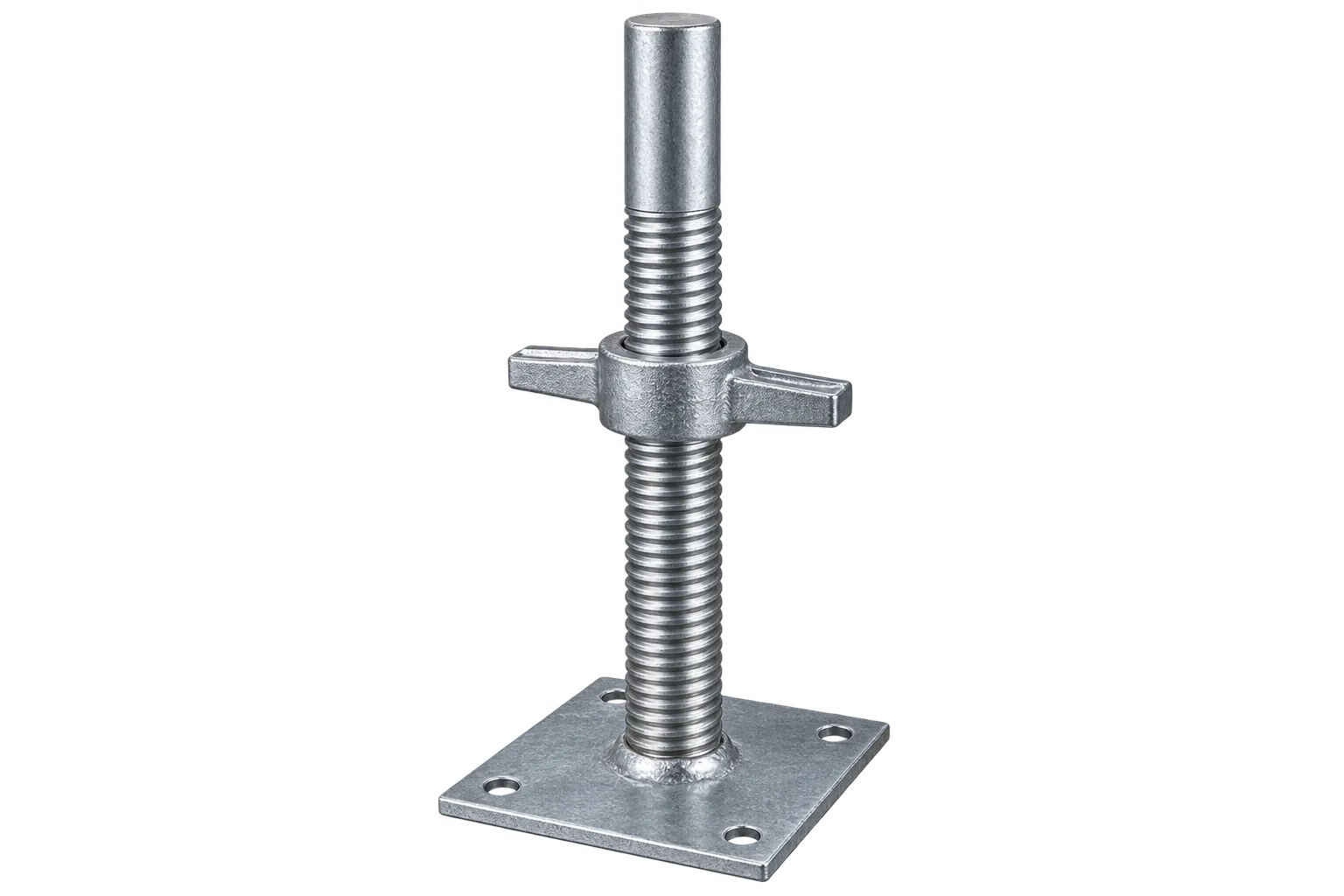
Diameter: 1-1/4, 1-1/2 in (N.B.) / 48.3, 60.3 mm (O.D.) · Length: 30-120 in / 760 mm-3 m
Specifications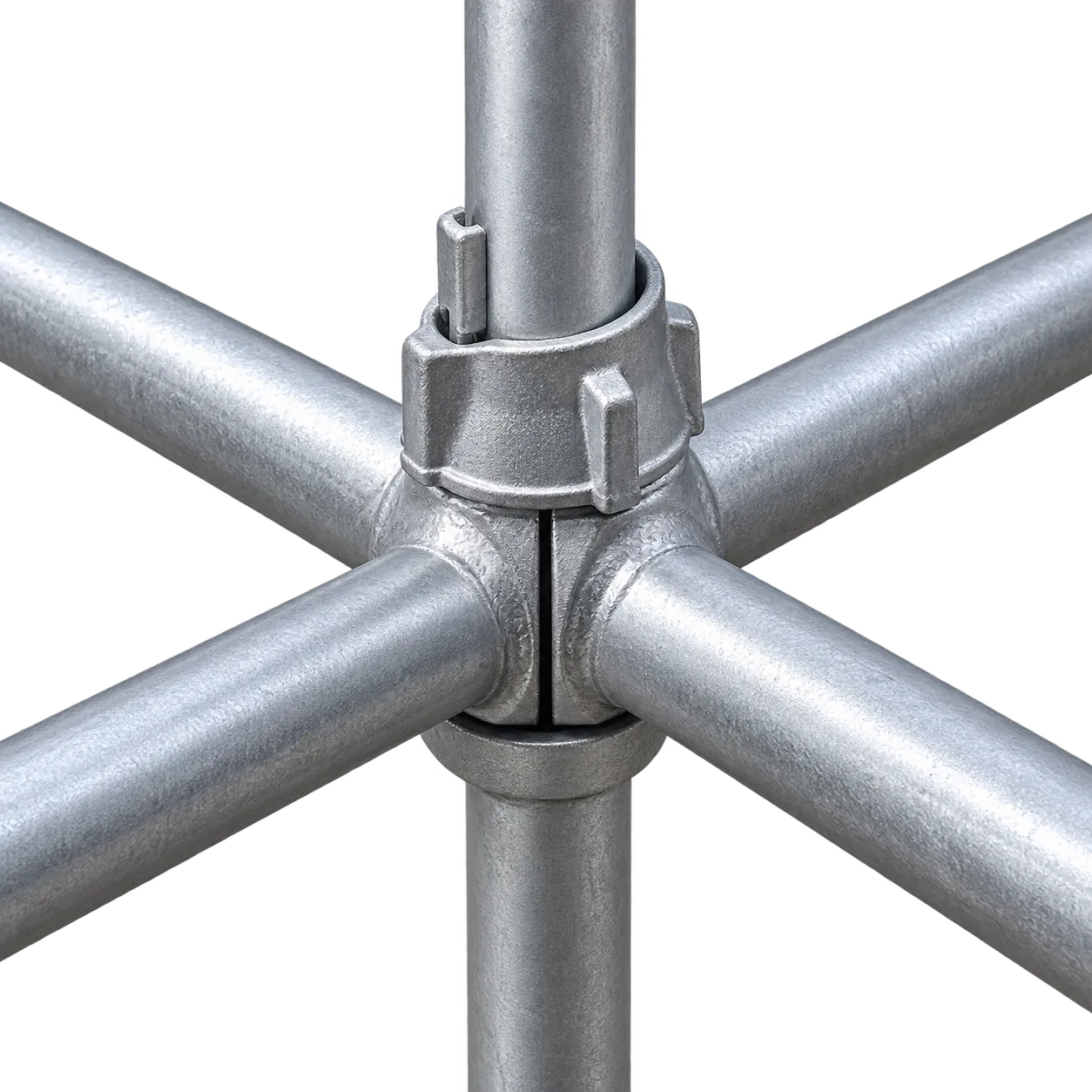
Diameter: 2 in (N.B.) / 48.3 mm (O.D.), 3.2 or 4.0 mm wall · Length: 3-12 ft / 1-4 m; verticals in 0.5 m steps
Specifications