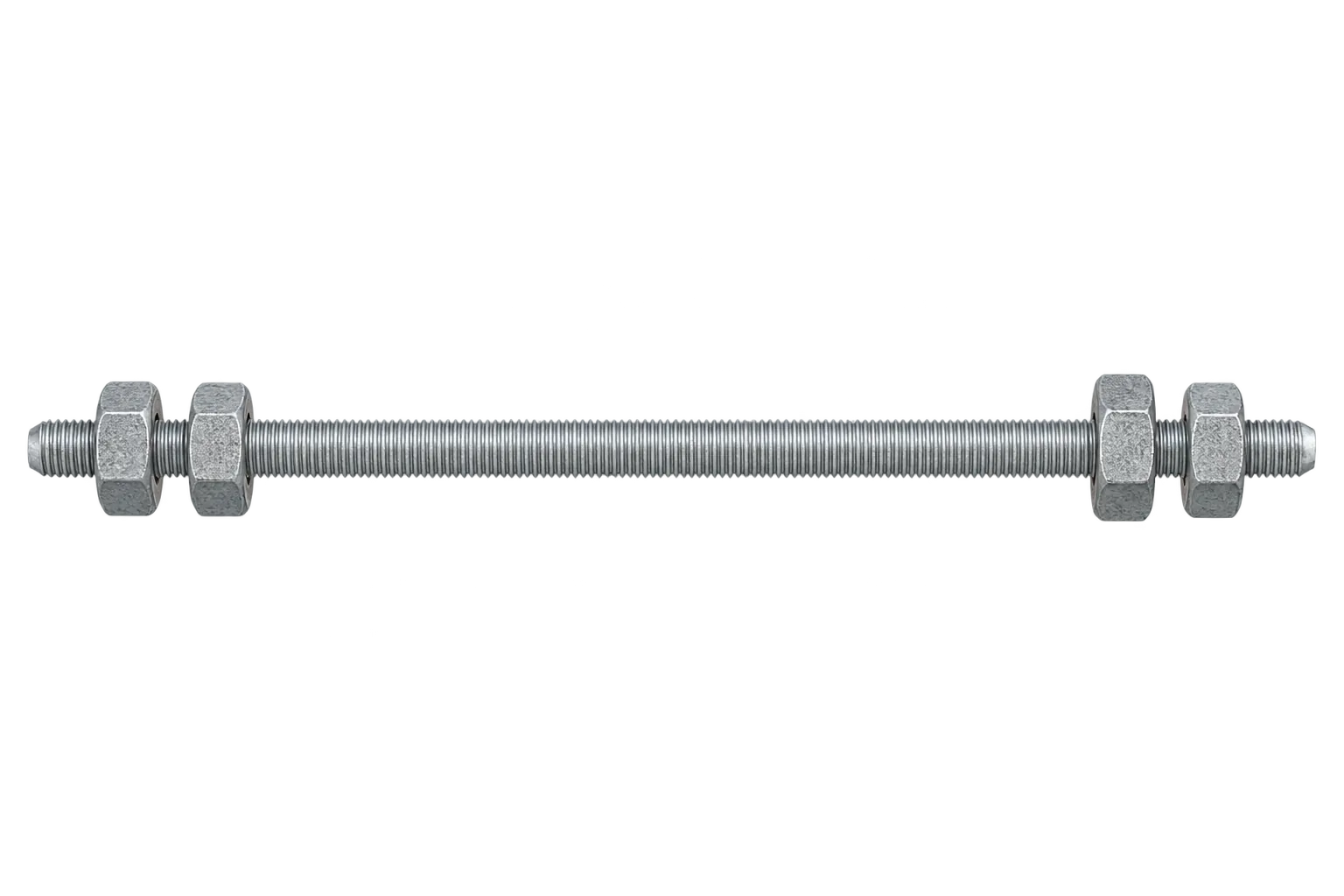
Fixes fittings into the pole face
A lag screw holds a fitting to the pole without going through it, where a through bolt is not needed or cannot be fitted.
Bolts, Washers & Ground Rods
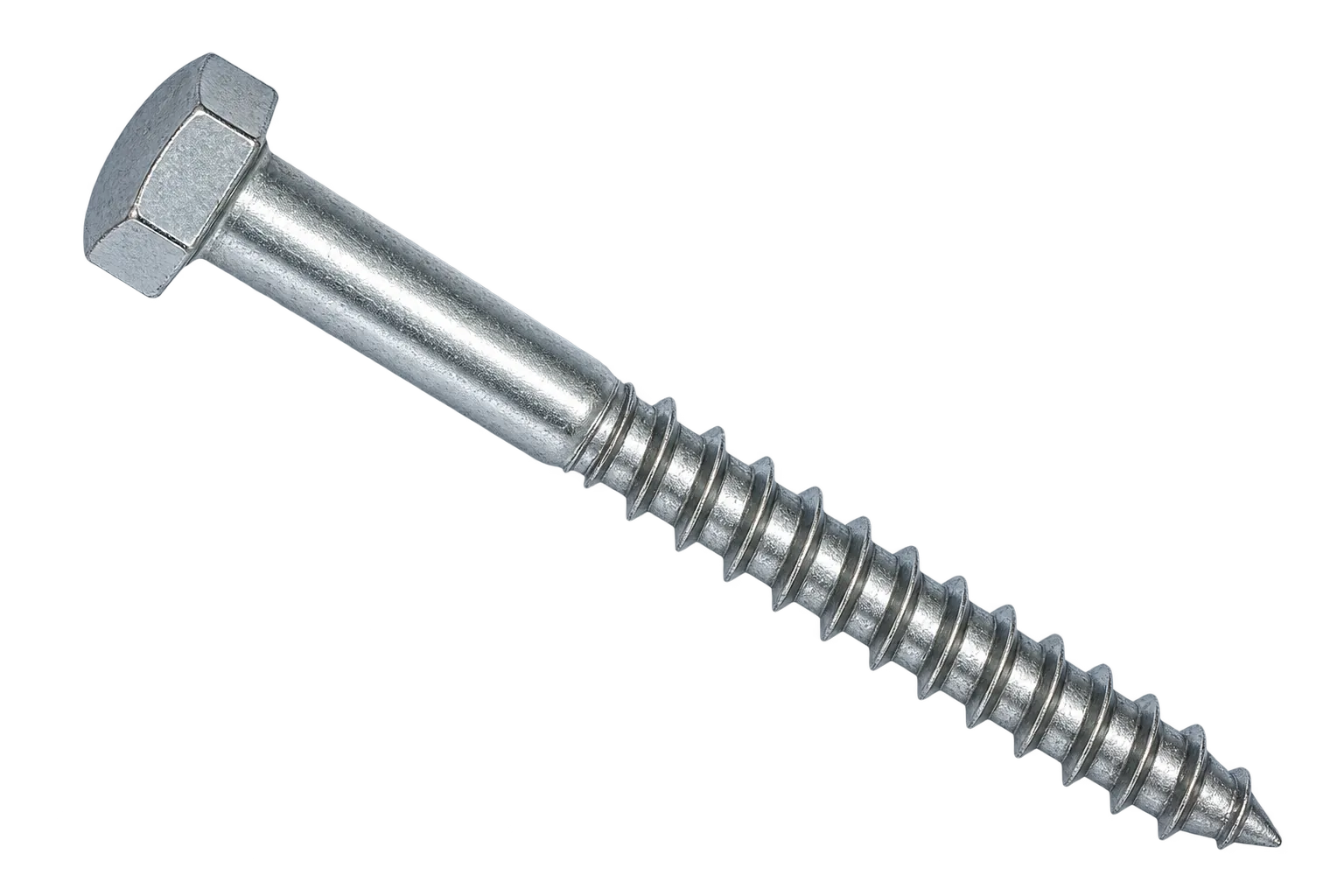
Lag Bolt is a lag screw: a hex or square head on a coarse wood-screw thread used to fix brackets, steps and fittings to one face of a wood pole. It comes with a regular gimlet point or a fetter drive pilot point. Specify diameter, length, head, point and the quantity you need.
At a glance
A lag screw holds a fitting to the pole without going through it, where a through bolt is not needed or cannot be fitted.
A gimlet point is turned into a pilot hole with a wrench; a fetter drive point is started with a hammer and then turned home.
1/4–1 in (M6–M25) diameters, 2 1/2–6 in (60–150 mm) long, hexagon or square head, to ASME B18.2.1, hot dip galvanized to ASTM A153.
A pilot hole is bored into the pole for the thread. The lag screw is started through the fitting, by hand or with a hammer for a fetter drive point, and turned in with a wrench until the head pulls the fitting tight against the wood.
Common applications
Cable guards, riser brackets, sign plates and small fittings are fixed to one face of the pole. Lag screws hold them without boring right through.
Steps are fixed up the pole with lag screws where the utility's standard calls for them. Galvanized heads stand up to the weather.
Crews use lag screws to refit or add fittings on existing poles. No hole through the full pole is needed.
Questions answered
Lag Bolt screws attachments into the pole face, while Carriage Bolt and Hex Headed Bolt through-bolt the fittings that need clamping.
Explore pole-line assemblies ↗Lag Bolt specifications
Pole-Line Hardware
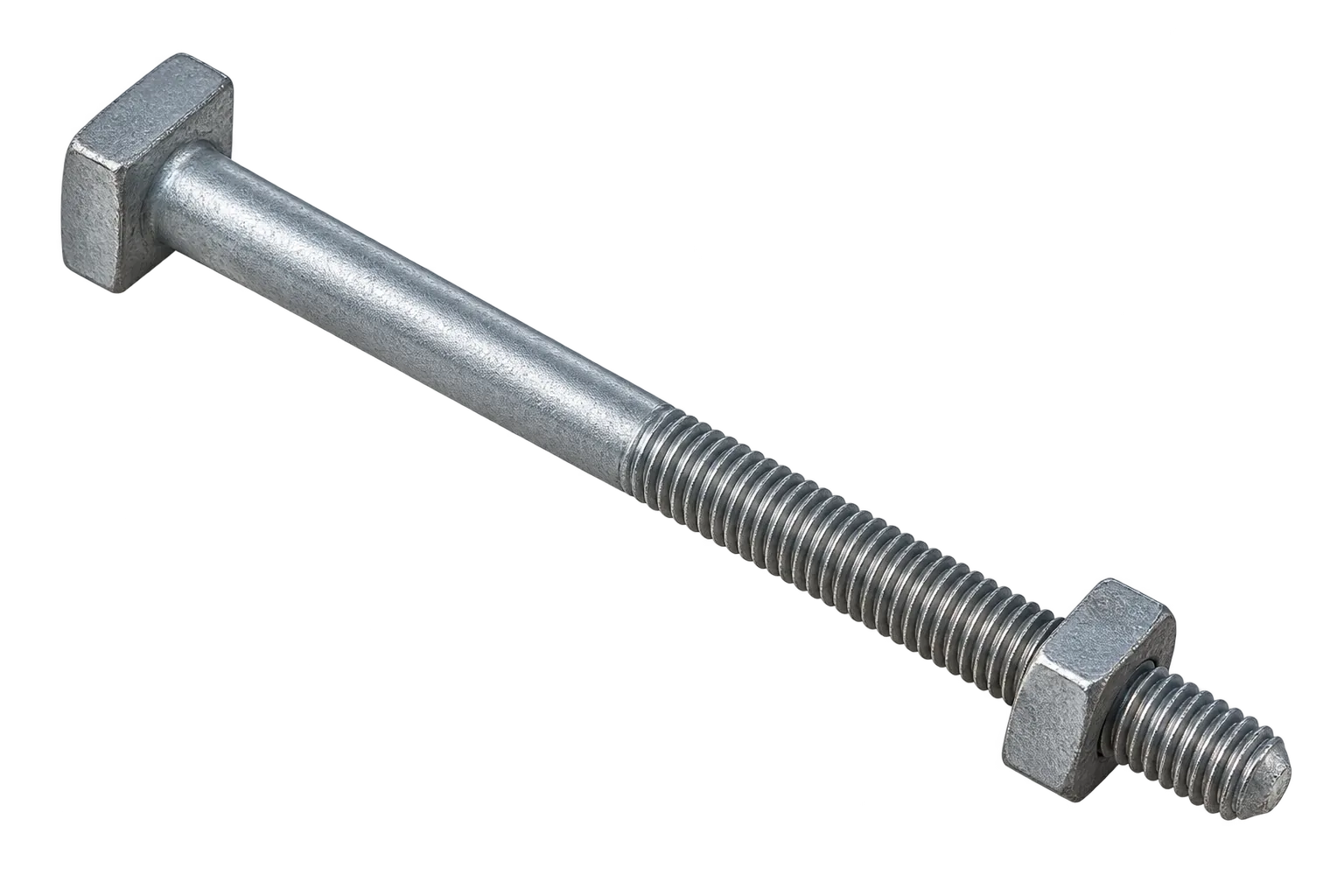
Diameter: 3/8-1 1/4 in (common 1/2, 5/8, 3/4 in) / M10-M32 · Length: 2-40 in / 50-1000 mm
Specifications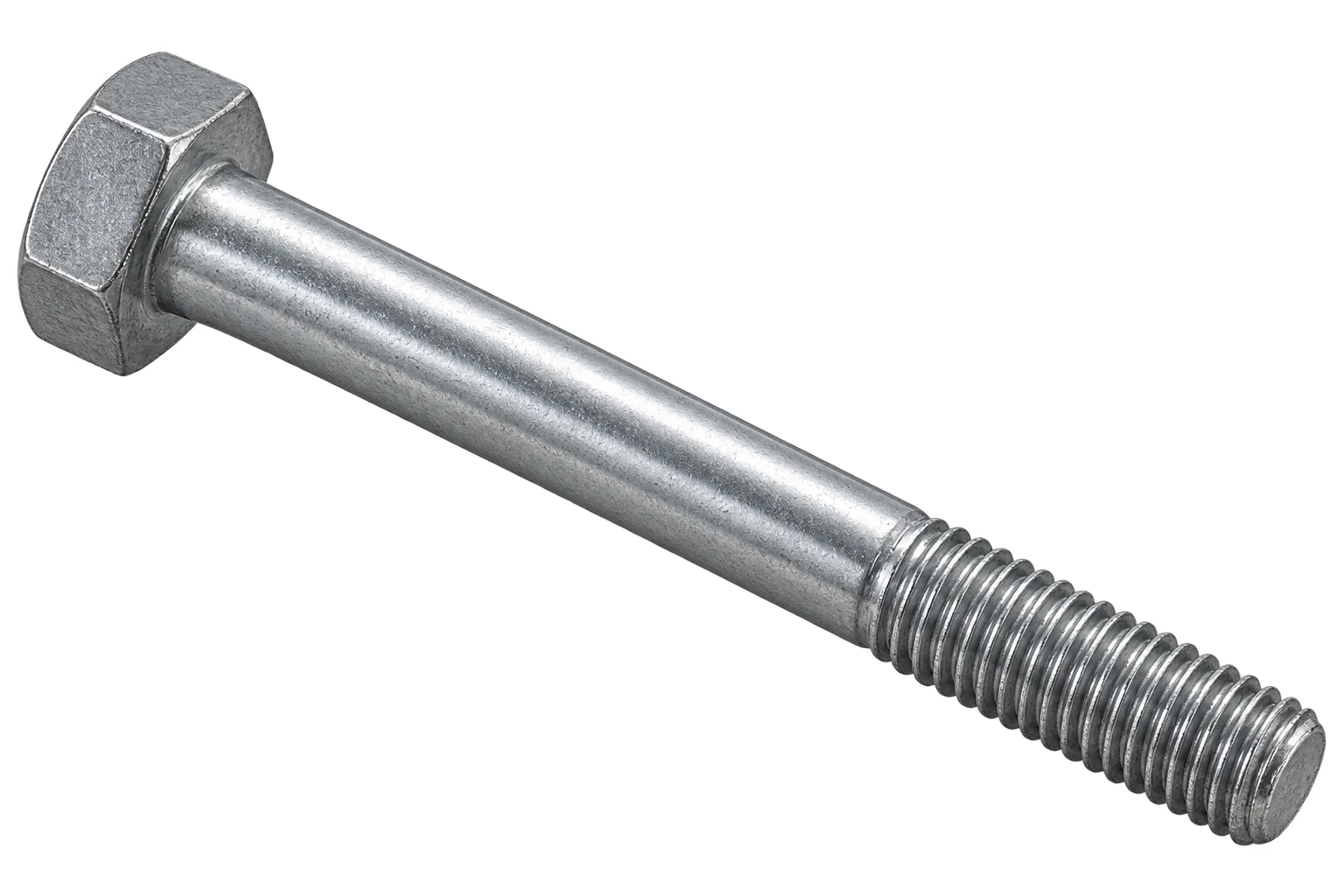
Diameter: 1/4-1 1/4 in / M6-M32 · Length: 2-40 in / 50-1000 mm
Specifications
Diameter: 3/8-5/8 in / M10-M16 · Length: 1-7 in / 25-180 mm
Specifications