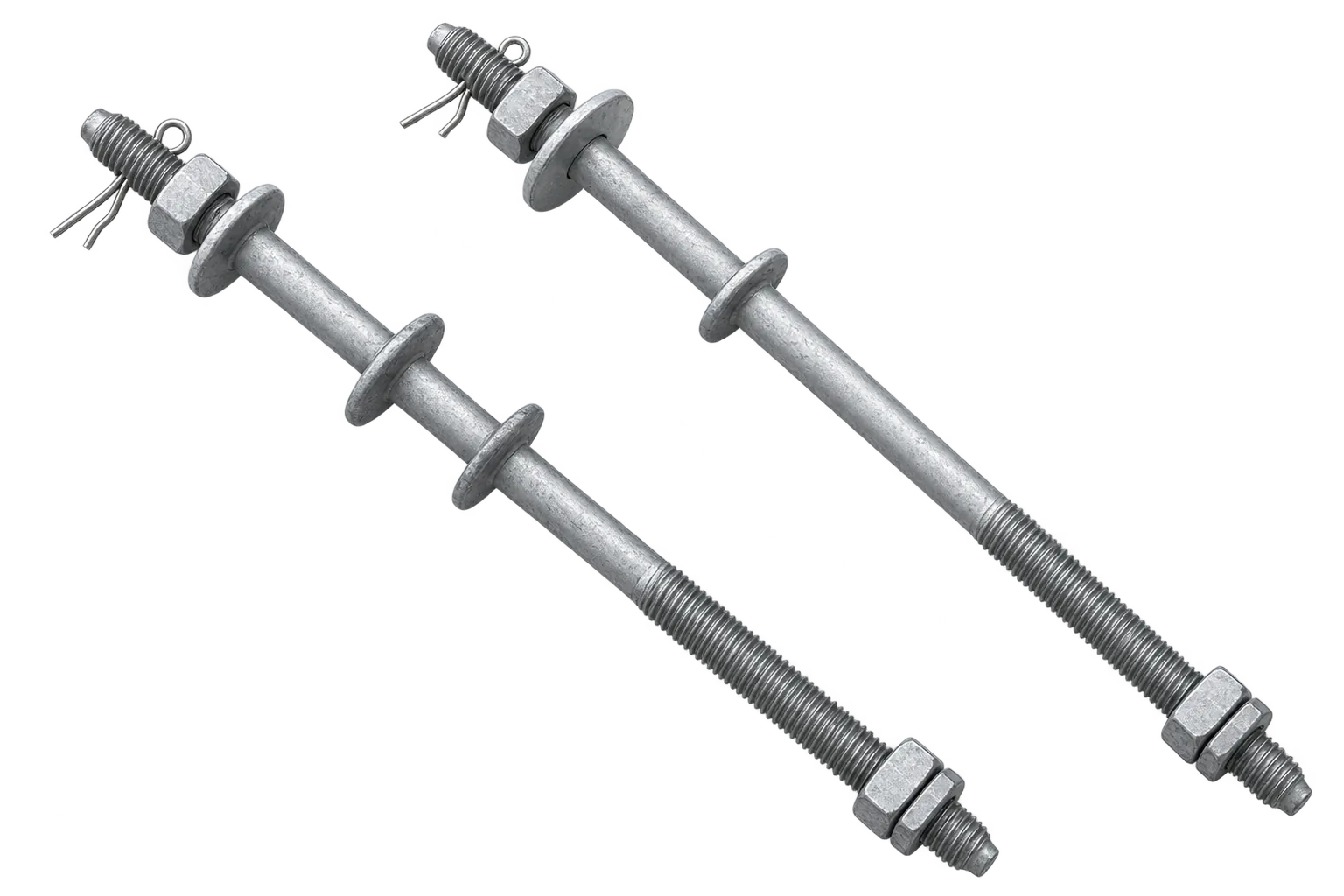
Fixes braces and fittings to wood
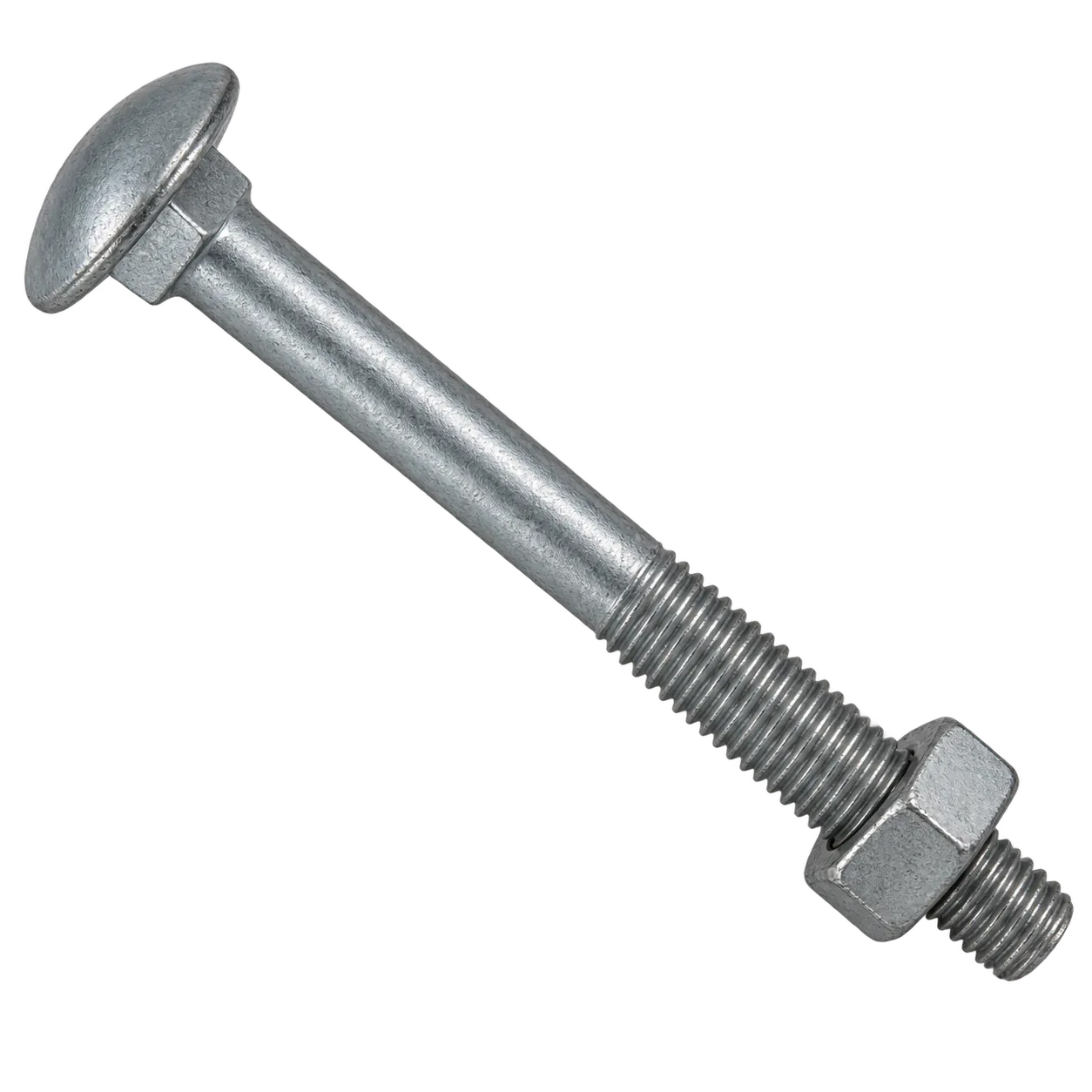
Carriage bolts fix crossarm braces, pole steps and light fittings where a smooth head sits on the outer face.
Bolts & Arming Hardware
Carriage Bolt has a round domed head and a square neck that grips the wood so the nut can be tightened from one side without holding the head. On poles it fixes crossarm braces and fittings. Specify diameter, length and the quantity you need.
At a glance
Carriage bolts fix crossarm braces, pole steps and light fittings where a smooth head sits on the outer face.
The square neck is pulled into the bored hole as the nut is tightened, so the bolt cannot spin in the wood.
3/8–5/8 in (M10–M16) diameters, 1–7 in (25–180 mm) long with up to 1 1/4 in (32 mm) of thread, domed head and square neck to ASME B18.5, galvanized to ASTM A153, supplied with a square nut.
Also known as
Spanish-speaking crews call it perno carruaje.
The bolt is tapped into a bored hole until the square neck seats in the wood. The square nut goes on the far side and is tightened with one wrench, because the neck holds the bolt still. The domed head is left with no edges to catch on climbing gear or conductors.
Common applications
Flat and V braces are fixed to the crossarm with carriage bolts. The domed head stays clear of insulators and conductors.
Pole steps, guards and small brackets use carriage bolts where the head faces workers. Nothing projects to snag a harness or glove.
Line crews also use carriage bolts in timber platforms and framing around substations. The same galvanized bolt serves each job.
Questions answered
Carriage Bolt fixes the braces in the crossarm assembly and smooth-headed fittings in the attachment assembly, with Square Nut and Washers.
Explore pole-line assemblies ↗Carriage Bolt specifications
Pole-Line Hardware
Diameter: 3/8-1 1/4 in (common 1/2, 5/8, 3/4 in) / M10-M32 · Length: 2-40 in / 50-1000 mm
Specifications
Diameter: 1/4-1 1/4 in / M6-M32 · Length: 2-40 in / 50-1000 mm
Specifications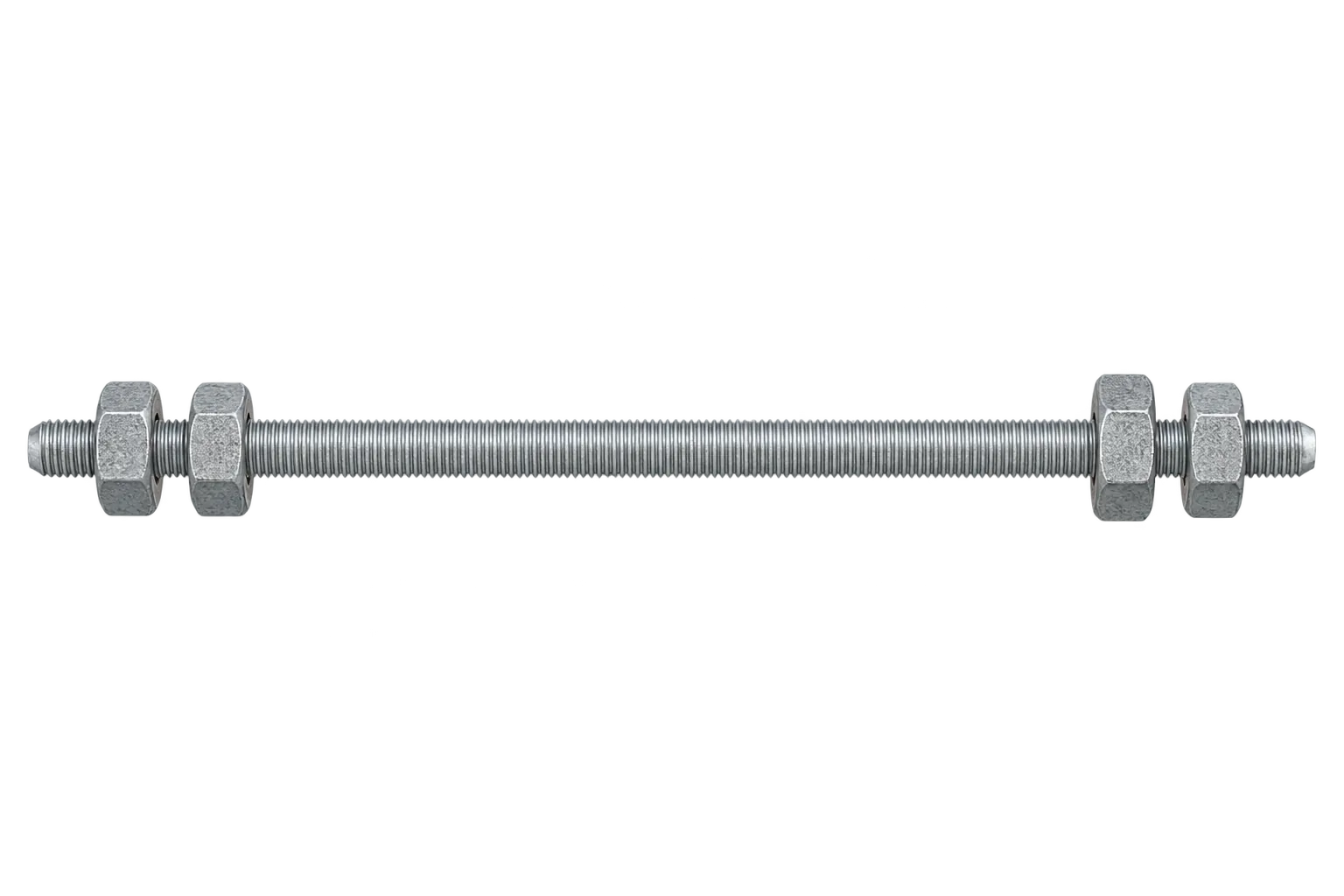
Diameter: 5/8-1 1/4 in (common 5/8, 3/4 in) / M16-M32 · Length: 10-36 in / 250-900 mm
Specifications